
Wave Function Collapse
Watch procedural worlds generate tile by tile using the Wave Function Collapse algorithm. Mesmerizing constraint-based generation.
About Wave Function Collapse
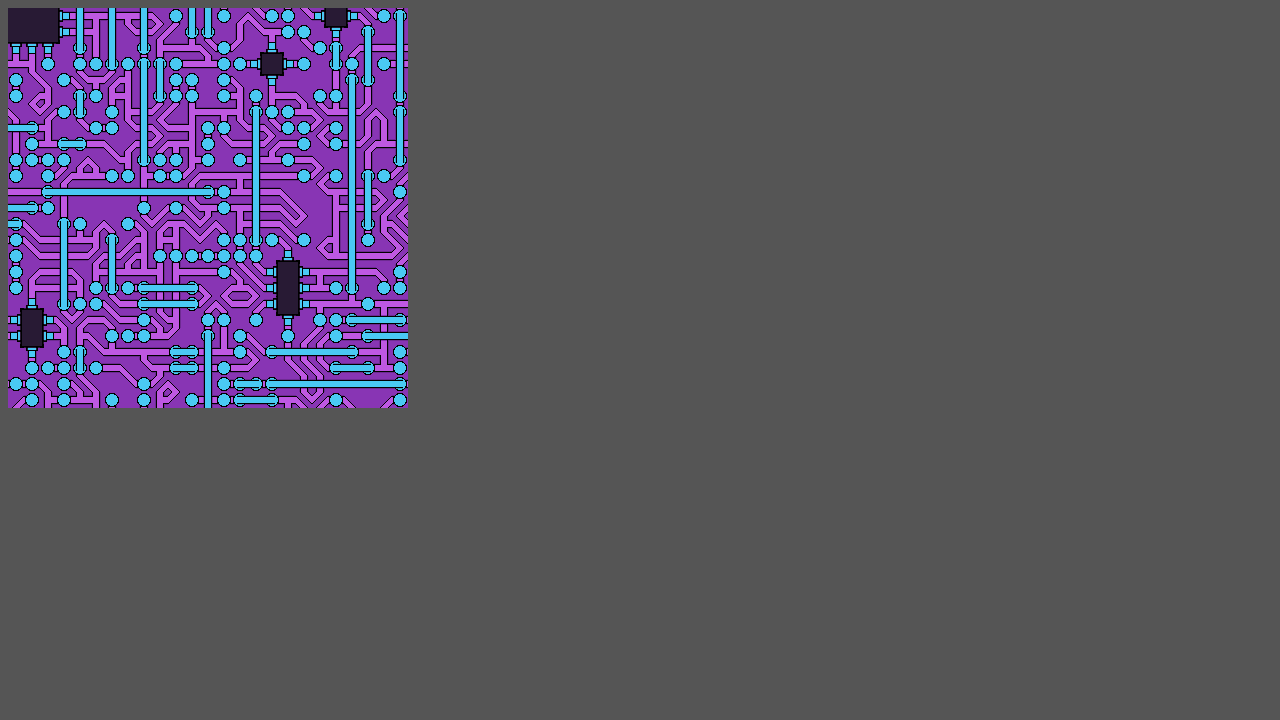
Each run starts with a blank grid and a set of tiles — then the algorithm gets to work. Cell by cell, it picks a tile that fits its neighbors, collapses the uncertainty, and propagates new constraints outward. Sometimes it flows smoothly into a complete map. Sometimes it hits a contradiction and has to backtrack. Either way, watching it happen feels oddly hypnotic.
Wave Function Collapse is a genuine procedural generation technique borrowed from quantum mechanics by way of game development. It's used in real tools to build levels, textures, and cityscapes, so there's actual substance behind the spectacle. If you're drawn to emergent systems and algorithmic art, it fits naturally into the interactive category alongside other simulations worth exploring. Fans of emergent behavior might also enjoy Ant Colony, where simple rules produce surprisingly complex results.
No controls to learn — just load it, watch, and refresh to generate something new. It runs best on desktop where you can see the full grid resolve in detail.
Look inside
How to use
• Watch the algorithm automatically generate patterns by placing tiles on a grid according to adjacency rules • The system starts with all possibilities available for each cell, then gradually "collapses" cells by choosing specific tiles • Cells with fewer possible options (lower entropy) are prioritized for collapse first • When a cell collapses, it propagates constraints to neighboring cells, eliminating incompatible tile options • Click anywhere on the canvas to restart the generation process with a new random pattern • The algorithm may occasionally get stuck in impossible situations - simply click to restart if generation stops • Two modes available: Tiled Model uses predefined tile sets with explicit adjacency rules, while Overlapping Model analyzes sample images to learn valid patterns • No other controls needed - the algorithm runs automatically once started, demonstrating procedural generation techniques inspired by quantum mechanics
Reviews
No written reviews yet. Be the first!
More from Interactive

An interactive particle sandbox. Drop sand, water, fire, and more and watch elements interact in a mesmerizing physics simulation.
by mohanad-80


